Library of Weekly Reports

Divrei Torah Rooted in Breslov Chassidut

Collected Archive of Shoemaker Reports

The Shoemaker Report is Rav Hoshea’s weekly Torah publication. Its focus is on internalizing and living Torah from the heart, not only from the head. The divrei Torah often take the parashah of the week as their point of entry and address central questions of inner avodah — including teshuvahprayer (tefillah)emunah, bitachon, and related areas of spiritual and personal refinement.

The writing assumes seriousness from the reader and speaks from within Torah life, with meaning emerging organically from honest analysis of our holy Torah and the words of Chazal, rather than from short-lived inspiration or simplified conclusions.

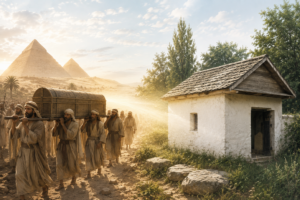
Ancient Israelites carrying the coffin of Yosef next to the building erected over the grave of R' Nachman of Breslev

Why Uman?

Uman Rosh Hashanah! Drawing on remarkable Breslov sources, this article explores the connection between R' Nachman, Mashiach ben Yosef, Yosef's bones, the Rosh Hashanah gathering in Uman, and the final Geulah—and why the journey to Rabbeinu's tziyun may occupy a profound place within the process of redemption itself.

Read More →
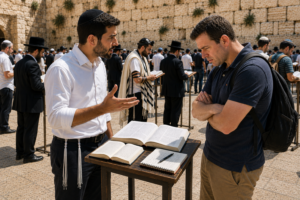
Jewish man and missionary at the kotel, missionary looking dejected because he didn't win his argument

Does Our Torah Predict Their Messiah?

Missionaries often cite Devarim 18:15 as proof that Moshe predicted their messiah as a unique future “prophet like me.” But is that really what the Torah says? When the pasuk is restored to its proper context and examined through the explanations of the Sifrei, Rashi, the Gur Aryeh, and the Rambam, the missionary reading begins to collapse. Rather than predicting a new religious figure who would replace the Torah of Moshe, the passage describes the continuing institution of prophecy within Yisrael — rooted in that Torah and bound by it.

Read More →

Turning Sorrow and Sighing into Simchah

The lineage of Mashiach passes through the unlikely nations of Moav and Ammon, through Rut, Na'amah, and David ha-Melech. This essay explores why geulah must emerge from such spiritually compromised beginnings, and how Sefer Tehillim, the ten types of niggun, and the avodah of David transform yagon and anachah – sorrow and sighing – into sasson, simchah, prayer, song, and new life.

Read More →

Send Someone Else!

Moshe’s seven-day refusal was not hesitation, but a moral protest: he sensed that the geulah would first intensify suffering before resolving it. He would not accept being the agent of a redemption that deepens pain unless it reaches completion. What appears as delay is, in truth, the structure of geulah itself—revelation, resistance, concealment, and final redemption.

Read More →

The Long and Winding Road

Mashiach’s origins are hidden in darkness—Lot, Balak, Eglon, and Rut. From incest to idolatry to devotion, the lineage of David ha-Melech reveals light emerging through klipah. Discover how redemption begins in the cracks of fear, impurity, and hidden holiness.

Read More →

Cunning: Skill in Achieving One's Ends by Deceit

What Was So Wrong With Lavan? It is written (Bereshit 3:1): וְהַנָּחָשׁ הָיָה עָרוּם מִכֹּל חַיַּת הַשָּׂדֶה אֲשֶׁר עָשָׂה יְיָ אֱלֹקִים (And the Nachash was more arum than all the animals of the field which Hashem G-d had made). What is the meaning of עָרוּם [arum]? The Bechor Shor says

Read More →

Raise Your Voice Like a Shofar

Mashiach and the Mechanics of Rebuke: A little over a year ago, we published a d'var Torah entitled To Rebuke or Not to Rebuke: That is the Question. In that article, we explained what happens to someone who receives rebuke from someone who is unfit to rebuke. In short, instead

Read More →

The Real Meaning of Chevlei Mashiach

How Machloket Not for the Sake of Heaven Serves a Higher Purpose In last few articles from The Shoemaker Report we have taken the time to explain teachings from the Zohar ha-Kadosh and from the Vilna Gaon that state unequivocally that one of the worst sins we could become involved

Read More →

Strolling Around the Mall

In last week's article, The Danger of Breathing in Poisoned Air, we learned that the transgression that led to the Jewish men leaving their holy encampment and going to the Midianite market was because they were not breathing in the pure air that emanated from the mouth of Moshe Rabbeinu.

Read More →

Purification from the Filth of the Snake

A Torah exploration of the parah adumah and its mysterious ability to purify impurity. Drawing on Chazal, Rashi, and Rebbe Nachman, the essay examines humility, suffering, and the role of the righteous soul, showing how the paradox of the red heifer illuminates the deeper meaning of Mashiach.

Read More →

Mashiach’s Weapon of War

How does Mashiach fight his wars? And by extension, how should we fight our battles? It is taught (Likutei Moharan 2:1): אִיתָא בְּסִפְרָא דִּצְנִיעוּתָא מִנּוּקְבָא דְּפַרְדַּשְׂקָא מָשַׁךְ רוּחָא דְּחַיֵּי לִמְשִׁיחָא כִּי עִקַּר כְּלֵי זֵינוֹ שֶׁל מָשִׁיחַ הוּא הַתְּפִלָּה שֶׁהוּא בְּחִינַת חֹטֶם כְּמוֹ שֶׁכָּתוּב וּתְהִלָּתִי אֶחֱטָם לָךְ וּמִשָּׁם עִקַּר חִיּוּתוֹ וְכָל

Read More →

Who is Mashiach?

We are all well acquainted with Rambam’s 7th article of Jewish faith, poetically rendered in our siddurim as: אֲנִי מַאֲמִין בֶּאֱמוּנָה שְׁלֵמָה שֶׁנְּבוּאַת משֶׁה רַבֵּֽנוּ עָלָיו הַשָּׁלוֹם הָיְתָה אֲמִתִּית וְשֶׁהוּא הָיָה אָב לַנְּבִיאִים לַקּוֹדְמִים לְפָנָיו וְלַבָּאִים אַחֲרָיו (I believe with complete faith [emunah] that the prophecy of Moshe Rabbeinu [our

Read More →